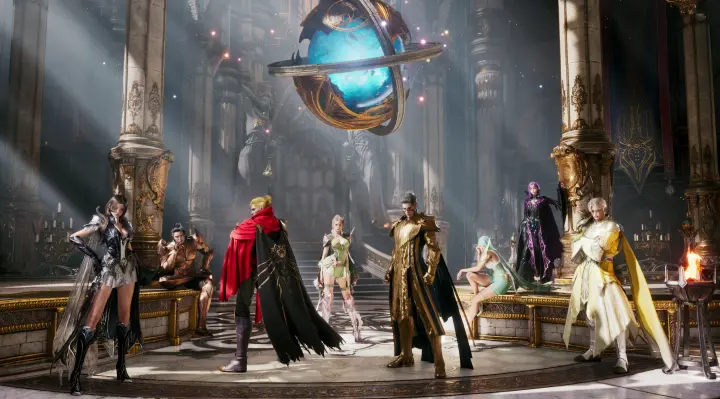
The Gladiator in Aion 2 is a melee warrior built around powerful physical attacks, sustained combat pressure and the ability to handle multiple enemies at once.
Its straightforward combat identity makes it an appealing choice for players who prefer fighting on the frontline instead of relying on ranged attacks or complex support mechanics.
However, playing Gladiator effectively requires more than simply using every available attack. Understanding skill priorities, resource management, enemy positioning and defensive timing can make a significant difference.
This Aion 2 Gladiator Guide covers the class's role, skill priorities, build considerations, combat rotation, resource management, mobility, PvP fundamentals and common mistakes to avoid.
Aion 2 Gladiator Class Overview
The Gladiator is a frontline melee damage dealer that relies on physical attacks to pressure enemies and maintain a consistent presence in combat.
Its playstyle revolves around staying within attack range, choosing the right moment to commit to powerful abilities and making effective use of its available skill combinations.
Compared with classes that depend on distance or spellcasting, Gladiator typically prefers direct engagement. This makes positioning especially important in encounters where enemies move frequently or punish players who remain in dangerous areas.
Strengths
- Strong frontline melee presence
- Consistent physical damage
- Useful against groups of enemies
- Direct and aggressive playstyle
- Good potential for sustained combat
- Can pressure opponents at close range
Challenges
- Must remain within melee range
- Positioning affects damage uptime
- Can lose pressure while chasing targets
- Requires attention to skill cooldowns
- Resource management affects consistency
- Committed attacks can be punished
Gladiator excels when it can maintain contact with its target and use its offensive abilities consistently. Good positioning and smart skill management are just as important as aggressive play.
Gladiator Role and Playstyle
The Gladiator's primary role is to deal melee damage while remaining active on the frontline. Its direct combat style rewards players who understand when to attack, when to reposition and when to preserve their resources.
The exact priorities change depending on the activity. Fighting a durable boss, clearing groups of enemies and dueling another player all place different demands on the class.
Damage dealing
In damage-focused encounters, the main objective is to maintain consistent offensive pressure. Use available damage skills efficiently and avoid spending too much time outside attack range.
A strong damage setup should support a smooth rotation rather than relying entirely on one powerful attack. Combining abilities effectively helps reduce periods of inactivity.
Fighting multiple enemies
Gladiator's melee-focused toolkit makes it suitable for aggressive engagements against groups of enemies. When several targets are nearby, positioning becomes important for making the most of attacks that can affect multiple opponents.
Avoid spreading enemies too far apart if your available attacks are better suited to hitting targets clustered around your character.
Adapting to different encounters
A damage-focused class still needs to respect encounter mechanics. Staying alive and maintaining consistent attack uptime is usually more effective than committing to attacks from an unsafe position.
Gladiator Skills and Upgrade Priorities
Skill upgrades should be planned around the abilities that contribute most to your regular combat rotation. Rather than distributing resources evenly across every skill, identify your most frequently used attacks and prioritize improvements that make a practical difference.
The ideal order can change as you unlock additional abilities and specializations. Reassess your priorities as your character progresses instead of assuming that an early-game setup will remain optimal indefinitely.
What to prioritize first
Understand the value of each upgrade
A higher skill level can improve an ability's performance, but the value of an upgrade depends on how often you use that skill and how it fits into your overall setup.
A frequently used attack may provide more consistent value than an ability with a long cooldown that rarely fits your encounters. On the other hand, a powerful ability can become a priority when an upgrade improves its impact or adds a useful effect.
| Skill Category | Priority | What to Consider |
|---|---|---|
| Core attacks | High | Frequency of use and consistent damage |
| Major damage skills | High | Impact, cooldown and rotation timing |
| Area attacks | Situational | How often you fight multiple enemies |
| Mobility skills | Situational | Distance management and repositioning |
| Defensive skills | Situational | Encounter difficulty and survivability |
Do not ignore utility
Damage should remain a central focus for a damage-oriented Gladiator, but utility abilities can improve your performance indirectly. A mobility skill may help you return to the target faster, while a defensive option can prevent an avoidable interruption to your rotation.
Prioritize skills according to their actual value in your preferred content. A practical, well-rounded setup is usually more useful than investing everything into a single ability without considering the rest of your rotation.
How to Build Your Gladiator in Aion 2
A good Gladiator setup should support the type of content you play most. A build designed for extended boss encounters may not be ideal for quickly clearing ordinary enemies or fighting other players.
When choosing skills and other character options, consider how each choice contributes to damage, mobility, survivability and resource management.
PvE damage setup
For PvE, the main objective is to maintain consistent damage while avoiding unnecessary downtime. Prioritize abilities that can be used reliably throughout an encounter and make sure your rotation remains comfortable to execute.
- Focus on skills that contribute consistently to damage.
- Keep important offensive abilities available for useful windows.
- Use area attacks when several enemies can be hit effectively.
- Retain enough mobility to respond to boss mechanics.
- Avoid unnecessary defensive sacrifices that lead to frequent defeats.
Open-world farming setup
Open-world farming rewards efficiency. The goal is to defeat enemies quickly, move between targets and spend less time waiting for resources or cooldowns to recover.
A setup with reliable damage and convenient area coverage can be particularly useful when fighting groups. However, the best choices depend on the enemies you are farming and how quickly you can defeat them.
PvP setup
PvP places greater emphasis on flexibility. Damage is important, but mobility, defensive timing and the ability to stay connected to a moving opponent can be just as important.
PvE Priorities
- Consistent damage output
- Efficient skill rotation
- Reliable area damage
- Encounter awareness
- Comfortable resource usage
PvP Priorities
- Closing distance effectively
- Maintaining pressure on targets
- Recognizing enemy openings
- Managing defensive options
- Avoiding predictable engagements
Build for your actual content
There is no reason to use exactly the same setup for every activity if your available skills and configuration options allow you to adapt.
Create a reliable general-purpose setup first, then adjust it when you encounter a specific weakness. This makes it easier to understand which changes actually improve your performance.
Avoid copying a setup without considering your current progression, available upgrades and preferred content. A build is only effective when it works with the abilities and resources you actually have.
Best Gladiator Combat Rotation
A good combat rotation helps you use your available attacks efficiently without wasting time or resources. The objective is not simply to activate every skill as soon as it becomes available, but to maintain a consistent flow of damage while responding to the encounter.
Your exact rotation will depend on the skills you have unlocked, their cooldowns and any effects provided by your current setup. Use the following principles as a framework for organizing combat.
Do not sacrifice positioning for damage
A rotation only works when your character can actually reach the target and complete the relevant attacks. If an enemy moves away or begins a dangerous mechanic, continuing the rotation without adjustment may result in missed attacks or unnecessary damage taken.
Learn the rhythm of your regular encounters and use safe openings to deal damage. Over time, this makes it easier to identify when to commit to longer attack sequences and when to hold back.
Keep your rotation flexible
Avoid treating your rotation as a completely fixed sequence. Some encounters require immediate movement, while others provide longer periods during which you can attack uninterrupted.
Build your rotation around reliable attacks first. Use longer cooldown abilities when they provide value, and adapt the sequence whenever movement or enemy mechanics make the original plan impractical.
Gladiator Resource Management
Resource management is an important part of maintaining consistent performance. Using powerful abilities without considering their costs can leave you unable to use other skills when they become necessary.
The exact approach depends on the resource mechanics of your current character setup, but the general principle is the same: avoid spending resources inefficiently when doing so provides little immediate value.
Avoid unnecessary resource expenditure
Not every encounter requires your most expensive abilities to be used immediately. Against weak enemies, ordinary attacks may already be sufficient. Saving stronger options for tougher targets can make your overall progression smoother.
Maintain a sustainable rotation
- Learn the resource cost of your frequently used abilities.
- Pay attention to how quickly your resources recover.
- Avoid repeatedly using expensive skills when cheaper attacks are sufficient.
- Keep important abilities available for dangerous encounters.
- Review your setup if resource shortages repeatedly interrupt your rotation.
Efficient Usage
Spend resources when an ability meaningfully improves your damage, helps finish a target or responds to an important combat situation.
Inefficient Usage
Repeatedly using costly abilities without considering the target, cooldowns or upcoming encounters can create unnecessary downtime.
Adapt to the length of the fight
Short encounters allow more freedom to use powerful abilities aggressively. Longer boss fights require greater attention to sustained performance and the timing of important skills.
As you gain experience, you will become better at recognizing when to spend resources immediately and when to preserve them for a more valuable opportunity.
Gladiator Positioning and Mobility
Positioning is one of the most important skills to develop as a melee Gladiator. Unlike ranged classes, you generally need to remain close enough to your target to use your offensive abilities.
Every unnecessary moment spent chasing an enemy is a moment during which you cannot maintain your normal damage output. Good positioning reduces that lost time and helps you respond to changing combat conditions.
Stay within effective range
Try to anticipate where your target will move rather than reacting only after it has already left your range. Against bosses, learn the movement patterns that commonly occur during their attack sequences.
In group content, avoid standing in locations that force you to move repeatedly without gaining any offensive advantage.
Use mobility with purpose
Close the Gap
Use available movement abilities when they help you reach a target and resume dealing damage.
Preserve an Escape Option
Avoid spending every movement tool immediately if the encounter may require another reposition.
Watch Enemy Mechanics
Move away from dangerous areas before committing to another long attack sequence.
Avoid Unnecessary Chasing
Anticipate target movement and reposition efficiently instead of following every movement late.
Positioning against groups
When fighting multiple enemies, consider how your position affects the number of targets you can hit. Grouping enemies effectively can make area attacks more valuable, while poor positioning may cause some abilities to hit fewer targets than expected.
Do not use a movement ability automatically if it could place you inside a dangerous attack or separate you from your group. Repositioning should improve your situation, not simply move you closer to an enemy.
Gladiator in PvP: Combat Strategy and Tips
PvP is different from fighting predictable enemies. Opponents can change direction, retreat, use defensive abilities or punish you when you commit to an attack.
A Gladiator must therefore balance aggression with awareness. Maintaining pressure is important, but attacking without considering the opponent's options can leave you vulnerable.
Choose the right moment to engage
Avoid using all your available mobility and offensive abilities at the beginning of every fight. An opponent may simply retreat or use a defensive option while your strongest attacks are unavailable.
Instead, look for an opportunity to close the distance and maintain pressure when the enemy has fewer options to disengage.
Manage your offensive windows
Powerful attacks are most effective when the opponent cannot easily avoid them or respond with a strong defensive action.
Pay attention to enemy movement and defensive behavior before committing to your most important abilities. If an opponent is clearly preparing to disengage, consider whether using a major cooldown immediately is worthwhile.
Fighting ranged opponents
Ranged opponents can attempt to maintain distance and force a melee character to spend time chasing them.
Be patient with your movement abilities. If you spend every available option just to begin the engagement, you may struggle to reconnect when the opponent creates distance again.
Fighting melee opponents
Against another melee class, the fight often depends on positioning, attack timing and the effective use of defensive options.
Avoid exchanging attacks without considering the opponent's actions. Look for opportunities to deal damage while minimizing the amount of damage you receive.
Aggression is most effective when it is controlled. Preserve useful options, observe your opponent's movement and commit to important attacks when you have a realistic opportunity to connect.
Gladiator Survivability and Group Play
Although Gladiator is primarily associated with melee damage, survivability remains important in every type of content. A defeated character cannot continue dealing damage, and frequent interruptions can reduce overall performance.
The objective is not necessarily to maximize defensive attributes at the expense of everything else. Instead, find a balance that lets you remain active while handling the demands of your encounters.
Recognize dangerous situations
Learn which enemy attacks require immediate movement and which can be handled while continuing to attack. Recognizing these patterns helps you avoid unnecessary damage without sacrificing too much offensive uptime.
Work with your group
In group content, pay attention to the positions of your teammates and the enemy's current target. Avoid creating unnecessary problems for your party by moving enemies into dangerous locations or ignoring mechanics that affect nearby players.
Good Group Habits
- Learn encounter mechanics
- Keep track of nearby teammates
- Move out of dangerous areas
- Maintain useful attack uptime
- Communicate during difficult fights
Habits to Avoid
- Ignoring dangerous mechanics
- Chasing targets into unsafe areas
- Using defensive tools too late
- Moving without considering teammates
- Prioritizing damage over survival at all costs
Balance offense and defense
A more aggressive approach can be effective when enemies are under control and incoming damage is manageable. When an encounter becomes dangerous, however, it may be better to reposition and wait for a safer opportunity.
Survivability and damage are connected. Staying alive allows you to keep attacking, while avoiding unnecessary movement and interruptions helps maintain your overall contribution to the group.
Common Gladiator Mistakes to Avoid
Many performance problems come from habits that are easy to overlook. Improving a few basic aspects of your playstyle can make your Gladiator more consistent without requiring a complete change to your build.
Using Every Skill Immediately
Spending every major ability as soon as combat begins can leave you without useful options later in the encounter.
Ignoring Positioning
Remaining out of range or standing in dangerous areas reduces damage and increases the risk of defeat.
Wasting Resources
Using expensive abilities without considering their value can interrupt your rotation later.
Chasing Without a Plan
Following a mobile opponent without preserving movement options can make it difficult to maintain pressure.
Using One Setup Everywhere
Boss fights, farming and PvP reward different priorities. Adjust your setup to suit the activity.
Ignoring Defensive Mechanics
Focusing only on damage can lead to avoidable defeats and longer encounters.
How to improve your performance
Final Thoughts on the Aion 2 Gladiator
The Gladiator is a strong choice for players who enjoy direct, frontline combat and a damage-focused melee playstyle. Its effectiveness depends on more than simply attacking as often as possible.
Understanding your skills, maintaining a consistent rotation, managing resources and staying within effective range are all essential parts of mastering the class.
Start by learning your core attacks and building a reliable combat sequence. As you become more comfortable, refine your skill priorities and adjust your setup to the content you play most.
In PvE, focus on consistent damage and encounter awareness. In PvP, pay closer attention to enemy movement, engagement timing and the value of preserving your available options.
With practice and a well-organized setup, Gladiator can become a reliable frontline damage dealer capable of contributing effectively across a variety of combat situations.
Master the fundamentals before chasing complicated setups. Consistent damage, good positioning and smart decisions provide a strong foundation for improving your Gladiator over time.